

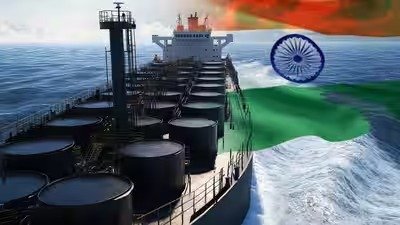
MEA says energy sourcing is based on national interest, but import data shows
sanctions and tariff pressure have repeatedly influenced India’s crude-oil choices.
New Delhi | September 19, 2026
India’s crude-oil sourcing is once again at the centre of a geopolitical debate after the United
States expanded its pressure on countries buying Russian energy.
On Friday, September 18, Ministry of External Affairs spokesperson Randhir Jaiswal said
that India’s energy-sourcing decisions are guided by national interest and that meeting the
energy requirements of India’s 1.4 billion people is an imperative. He added that India continues
to buy energy from diversified sources and that New Delhi is determined to protect its trade and
economic interests.
The immediate backdrop is the U.S. Lindsey O. Graham Sanctioning Russia and Iran Act of
2026, which gives the U.S. president the discretion to impose tariffs of up to 100% on countries
that continue purchasing Russian oil and gas. The legislation has passed Congress and was
signed by President Donald Trump on September 18, according to Reuters. The tariffs are not
automatically imposed on every buyer.
The question, therefore, is not simply whether Washington is “directing” India’s oil purchases.
The more measurable question is: Have U.S. sanctions, waivers, tariff threats and financial
restrictions influenced the composition of India’s crude-oil imports?
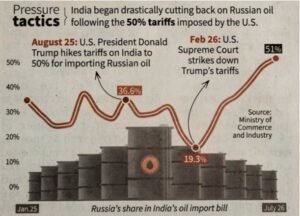
Russia’s share of India’s crude imports was around 30- 40 % between July 2024 and July 2025
but fell to 19.33% by Feb 2026 when the US hiked tariff to 51% . In July 2026 when the US
withdrew tariffs Russia’s crude oil share again stood at 51%. Reuters later reported that
Western sanctions and pressure to secure a U.S. trade deal contributed to further reductions in
Russian purchases in early 2026.
The Iranian case is even clearer. In November 2018, President Donald Trump reimposed U.S.
sanctions on Iran in a bid to quell its supposed nuclear weapons ambitions. India’s imports fell
sharply, and India last received Iranian crude in May 2019, according to S&P Global data.
India imported no oil for the six years spanning 2020-26.
Venezuela presents a more complicated picture: its oil production had already declined, while
U.S. sanctions subsequently added further pressure. India later resumed Venezuelan purchases
after U.S. sanctions relief.
Russia, meanwhile, remained more resilient. Its share rose from about 2% in 2021 to nearly
39% in 2023, as discounted Russian crude became attractive after Western sanctions on
Moscow.
The data therefore suggests that U.S. sanctions and tariff pressure have influenced India’s
crude-import choices, although prices, supply availability, refinery economics and India’s own
energy-security strategy have also played important roles.
India’s energy relationship with Russia has been more resilient but it too has bowed before US
pressure.